How to Join Crochet Motifs
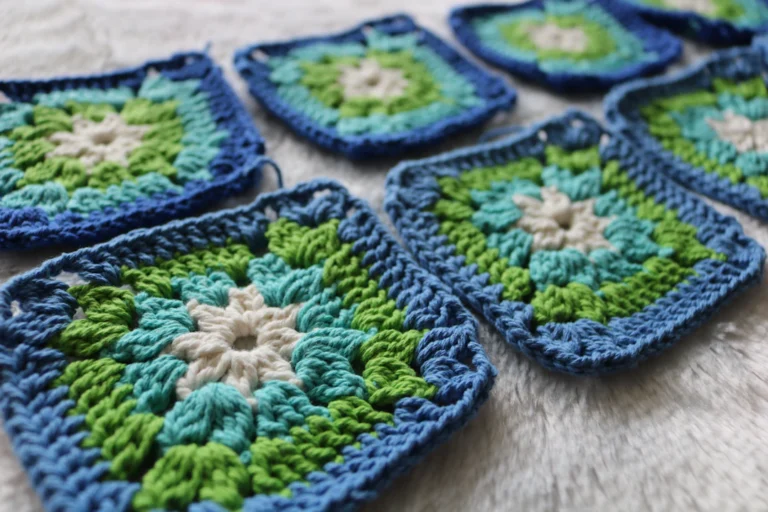
Joining crochet motifs is the step that turns small squares, circles, or hexagons into a finished blanket, scarf, bag, or table runner. A careful join keeps the work flat and makes the project feel intentional. Before choosing a method, block every motif to the same size and count the stitches along each edge.
Prepare the Motifs
Lay the pieces on a table in the order you want them joined. Check color balance, direction, and any visible right side. Use removable stitch markers to hold the layout together in rows. This prevents accidental rotation while you work.
Slip Stitch Join
Place two motifs with wrong sides together. Insert the hook through the outer loop of the first motif and the outer loop of the matching stitch on the second motif. Pull yarn through both loops and through the loop on the hook. Continue across the edge. This creates a visible ridge and works well when you want a defined line between motifs.
Single Crochet Join
Hold motifs wrong sides together and work one single crochet through both edges at the same time. Use one stitch from each motif for every joining stitch. At corners, work one chain or one single crochet depending on how much room the layout needs. This join is sturdy and useful for blankets or bags.
Mattress Stitch Join
For a flatter seam, use a yarn needle. Place motifs side by side with right sides facing up. Sew under the top loops or edge bars, alternating from one motif to the other. Pull gently every few stitches. Do not pull so tightly that the seam puckers.
Finishing the Joined Piece
After joining, weave in all seam ends and add a border around the full project. The border hides small uneven spots and gives the project a final frame. If the piece waves, block it again after the border is complete.
Choosing a Method
Use slip stitch when the seam is part of the design, single crochet when strength matters, and mattress stitch when you want the join to recede. Before joining a full blanket, connect two spare motifs and check whether the seam changes the width. A small test join can prevent a large project from becoming stiff or uneven.